
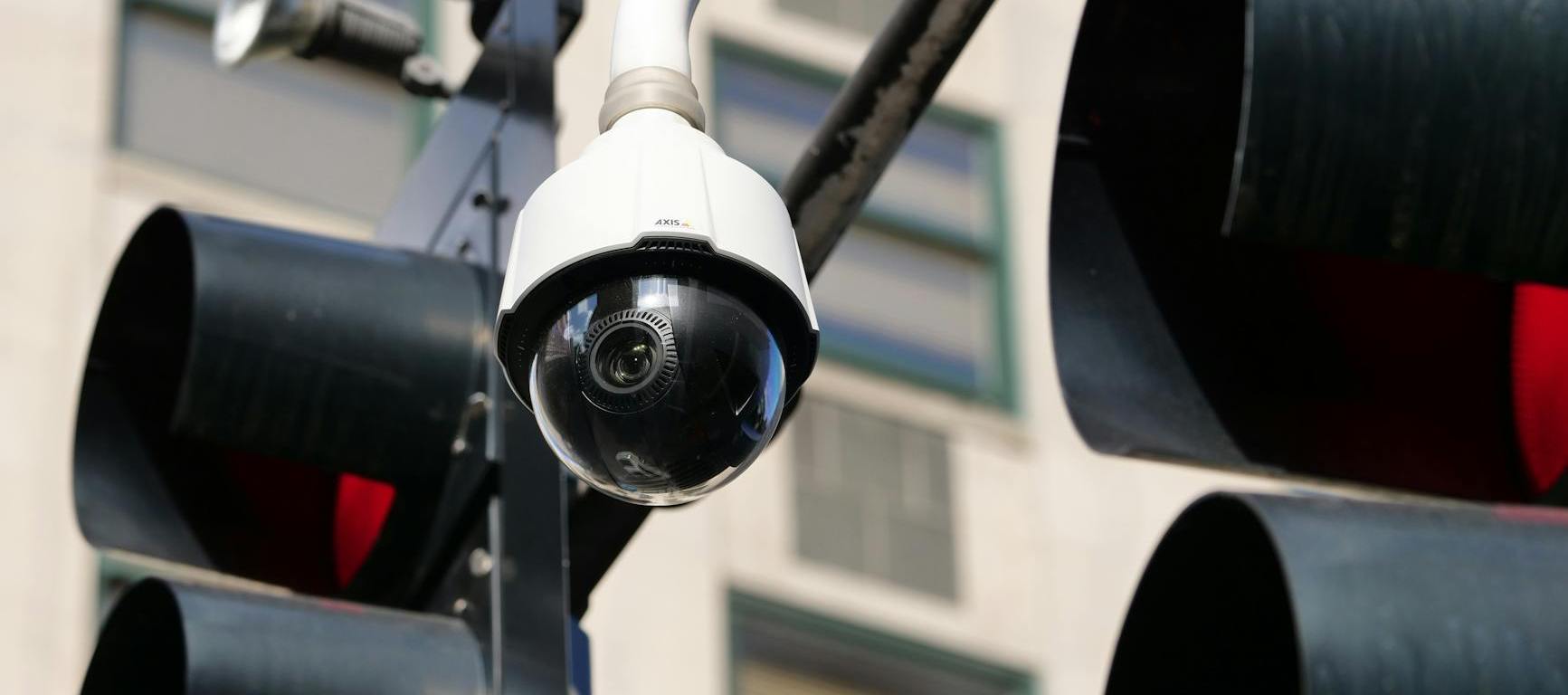
What began as a public-safety initiative aimed at reducing excessive vehicle noise is increasingly becoming a political flashpoint, as newly obtained records have prompted questions about who is benefiting from the city’s rapidly expanding network of automated noise-enforcement cameras.
The controversy centers on a series of contracts awarded during the implementation of the city’s Acoustic Compliance Initiative, commonly known as the noise camera program.
The system, first introduced as a pilot project, automatically detects and cites vehicles that exceed city-established sound thresholds. Supporters argue the cameras have reduced disruptive noise in residential neighborhoods. Critics contend the program has evolved into a revenue-generating apparatus with limited public oversight. Now, attention is turning toward the businesses involved in administering the technology.
According to procurement documents reviewed by the Chorus, several subcontractors associated with installation, maintenance, calibration, and data processing services have financial ties to entities connected to Mayor Gondola and members of the Gondola family.
No evidence has emerged indicating criminal conduct, nor have officials alleged any legal violations. Nevertheless, the overlap has attracted renewed public attention given the Gondola family’s longstanding influence in regional politics and municipal development.
“The issue isn’t necessarily legality,” said a municipal governance researcher, who wished to remain anonymous. “The issue is perception. When the same family appears repeatedly around public contracts and public revenue streams, people naturally start asking questions. Rightfully, so.”
City budget records indicate that noise-camera citations have significantly exceeded original projections. Since deployment expanded citywide, fine collections have steadily increased, with revenues flowing into multiple municipal funds. Supporters argue that the solution is simple. “Don’t violate the noise ordinance. If a vehicle is traveling at the speed limit, then there is no noise issue,” one city official said.
Yet opponents argue that the incentive structure itself deserves scrutiny. Several neighborhood organizations have questioned whether enforcement decisions are being influenced by the substantial revenue generated through citations. One resident who received multiple violations during the first six months of the program described the system as “less about safe, quiet streets and more about perpetual collection.”
At the center of the controversy are service agreements involving sensor calibration, acoustic analytics, software integration, and hardware replacement. Public records indicate that multiple firms participating in those contracts share historic business relationships with individuals linked to the Gondola family’s broader commercial network. The connections vary in scope and access.
Some involve former business partnerships. Others involve consulting arrangements, investment holdings, or overlapping corporate officers. None of the relationships identified thus far appear prohibited under existing procurement regulations. Even so, watchdog groups say the pattern merits closer examination.
City Council officials have strongly defended both the noise-camera initiative and the procurement process behind it. In a statement released Tuesday, a municipal spokesperson said all contracts were awarded according to established procedures and underwent required reviews.
“The city’s acoustic enforcement program has improved quality of life for thousands of residents. Contract awards were conducted in accordance with applicable regulations and policies.” Representatives for the Gondola family likewise denied any impropriety. A written statement provided to the Chorus characterized the allegations as speculative narratives built upon routine business relationships, “The existence of professional connections does not imply undue influence,” the statement read.
For many residents, however, the dispute reflects a broader concern that has surfaced repeatedly throughout recent civic controversies. Who benefits? Who pays? How much visibility should the public have into the systems operating around them? As noise cameras continue issuing citations across the city, those questions appear unlikely to fade.
Meanwhile, the cameras remain active. Listening. Recording. And, according to city records, continuing to generate revenue one citation at a time.

